Franklin Sports
Pop-Up Baseball Hitting Trainer with Bat & 5 Balls
Pop-Up Baseball Hitting Trainer with Bat & 5 Balls
Free Curriculum & Lesson PlansOpen your printable three-session learning guide
DiscoveryBin | Where Every Day Is a New Discovery
Curriculum & Learning Guide
Pop-Up Baseball Hitting Trainer with Bat & 5 Balls
Subject: Physical Education • Grade levels: 4th–6th Grade, 7th–9th Grade • Recommended ages: Ages 9-12
Learning objective: Practice safe batting position, visual tracking and timing.
How to teach this unit
Suggested time: 15-30 minutes per session, including warm-up and rest. Prepare a clear movement area, the product, and paper to record observations or attempts.
Learning outcomes: The student will learn the target skill, practice it with feedback, use it in a final activity, and show or explain one thing learned. Adjust pacing without changing the goal.
Three-session lesson plan
Session 1 - Explore and model
- Introduce the learning objective. Demonstrate safe use and explain what the student will practice.
- Set up trainer and practice a controlled dry swing.
- Ask what the learner noticed and save a quick baseline observation or first work sample.
Session 2 - Guided practice
- Review one important skill or observation from Session 1.
- Observe ball launch timing and make gentle contact.
- Offer a specific correction or strategy, repeat once, and compare what changed.
Session 3 - Apply and explain
- Invite the learner to predict an outcome or set a reasonable goal.
- Compare two ten-swing rounds and adjust stance.
- Discuss what improved, what was difficult, and what the learner would try next. Save evidence of the final task.
Show what was learned
Suggested evidence of learning: Record contact totals and one technique change.
- □ Followed instructions and safe handling guidance
- □ Practiced the target skill with suitable help
- □ Applied one suggestion or made an adjustment
- □ Completed a work sample or explained learning
Parent assessment: Compare the learner's first and last attempts or work samples. Look for effort, understanding, better technique, more consistent performance, or a completed creative result. Record the kind of support needed rather than giving a grade based only on speed or score.
Adaptations: Parents may change timing, repetition, reading support, or adult assistance to fit the student. Older learners can add measurements, explanations, or a written reflection.
Safety: Supervise swings; keep others outside batting zone.
Parent learning record
Product: Pop-Up Baseball Hitting Trainer with Bat & 5 Balls • SKU: DB-PE-B075SFCG15
Student: ______________________________ Grade: _____________
Instruction dates: _______________________ Total time: ___________
Learning objective / skill practiced: ______________________________________________
Work sample or observation: ____________________________________________________
__________________________________________________________________________
Improvement noticed / next steps: _______________________________________________
__________________________________________________________________________
Parent or instructor: ___________________________ Date: _______________
DiscoveryBin original supplemental curriculum | 10-14-2026. These learning activities do not guarantee school credit, ESA reimbursement, or approval by a state or scholarship program. Always follow manufacturer age and safety directions.
On a Mac, select PDF > Save as PDF in the print window. The printable version opens separately from the shopping page.
Couldn't load pickup availability
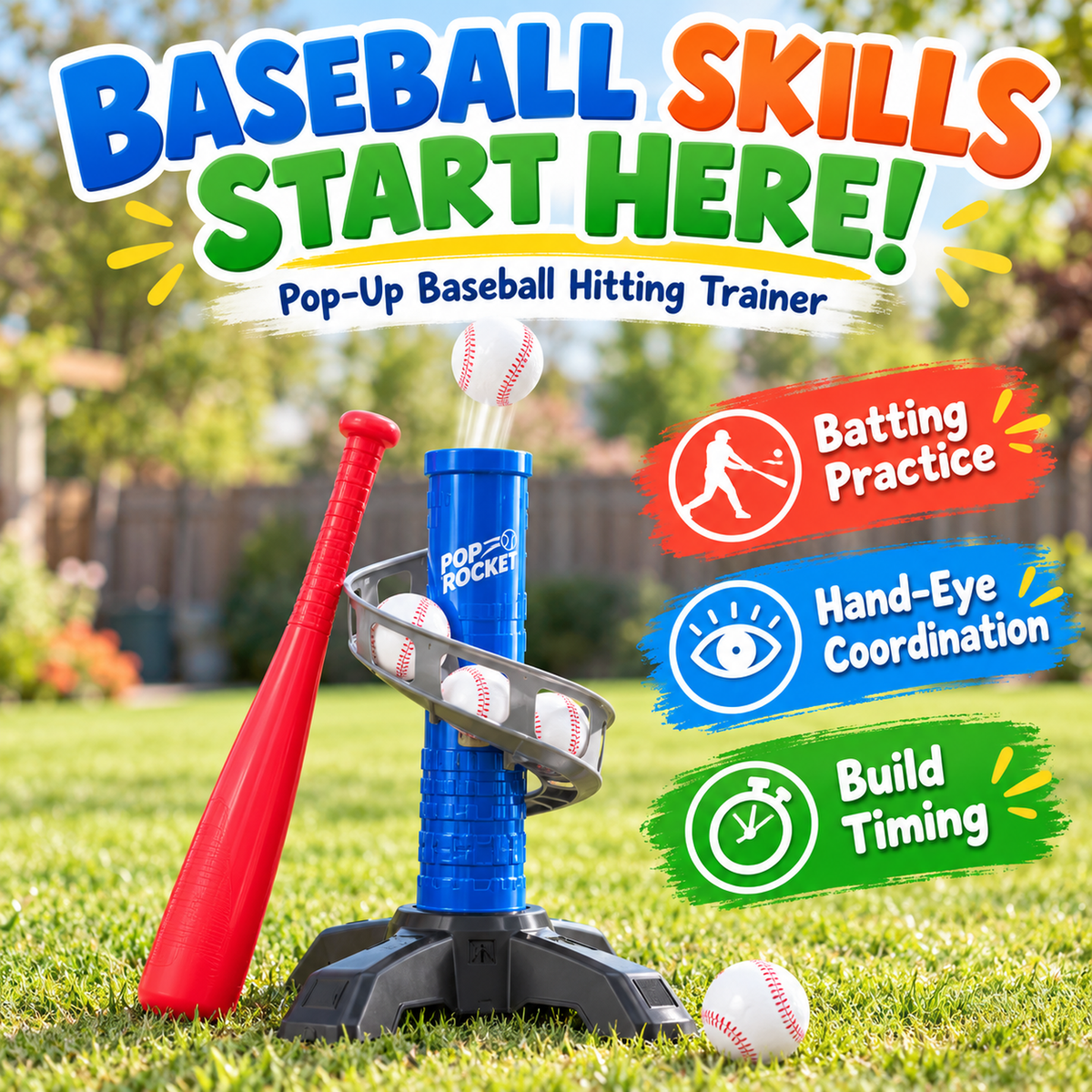
Build batting timing and hand-eye coordination with a self-feeding baseball trainer designed for independent practice. The launcher pops a ball up about every 7 seconds so young players can reset, track the ball, and practice making contact without a pitcher.
What's included: pop-up hitting trainer, five plastic baseballs, and a 24-inch collapsible plastic bat. Requires four AA batteries, not included.
Recommended ages: 9-12.
Educational use: physical education, batting fundamentals, timing, visual tracking, and hand-eye coordination.
Share